Arsenic Testing in Water: What the Sai River News Means for Water Monitoring
Arsenic Testing in Water: What the Sai River News Means for Water Monitoring
Recent reports about arsenic contamination in Thailand’s Sai River have brought water quality and public-health monitoring into sharp focus. For communities, environmental teams, and water professionals, the reports are a reminder that arsenic testing in water is important when contamination is suspected—and that timely field screening can help teams decide what to investigate next.
In November 2026, international reporting said tap-water supplies in 14 villages in Mae Sai were suspended after arsenic levels in local waterworks were reported at up to 30 times the safe limit. The same report noted that Sai River water had tested at 25 times the drinking-water limit. These are reported findings from a developing situation; readers should follow updates from the relevant authorities for current local guidance. Straitstimes
The news highlights why arsenic testing in water matters not only during an emergency, but also as part of ongoing sampling and monitoring. A field test can provide preliminary information at the sampling location, helping teams organise follow-up work. It does not replace laboratory confirmation when results are needed for official decisions.
Why is arsenic testing in water important?
Arsenic cannot be reliably identified by looking at, smelling, or tasting water. Testing is needed to assess whether a sample contains arsenic and whether further investigation may be appropriate. Regular arsenic testing in water can support environmental surveys, water-quality programmes, and public-health monitoring.
When a water concern is reported, teams may need to collect samples from multiple locations and repeat testing over time. Arsenic testing in water at or near the sampling site can help provide preliminary information sooner than sending every sample away before any screening takes place. This can help teams plan sampling and identify which results may need additional attention.
The value of arsenic testing in water depends on using the right method for the sample and the decision being made. A field screening result should be interpreted according to the test instructions. Where a result will guide regulatory action or a decision about whether water is safe to use, confirmatory testing by an appropriately qualified laboratory may be necessary.
How field arsenic testing in water supports monitoring
Field teams often work across multiple locations, including sites that may be far from laboratory facilities. A portable kit designed for arsenic testing in water can help users perform preliminary tests close to the sampling point, following the manufacturer’s procedure.
For monitoring programmes, arsenic testing in water may support:
- Preliminary screening of samples from different locations
- Follow-up sampling and site surveys
- Field investigations by environmental or public-health teams
- Decisions about which samples may need laboratory analysis
- Ongoing monitoring when a potential source of contamination is being assessed
Field kits are most useful when results are recorded consistently and interpreted in context. A single screening result does not, by itself, establish the source, extent, or health impact of contamination. That is why arsenic testing in water should be part of a broader monitoring plan, with suitable sampling procedures and confirmatory testing where required.
Lovibond® EcoSafe Arsenic for field testing
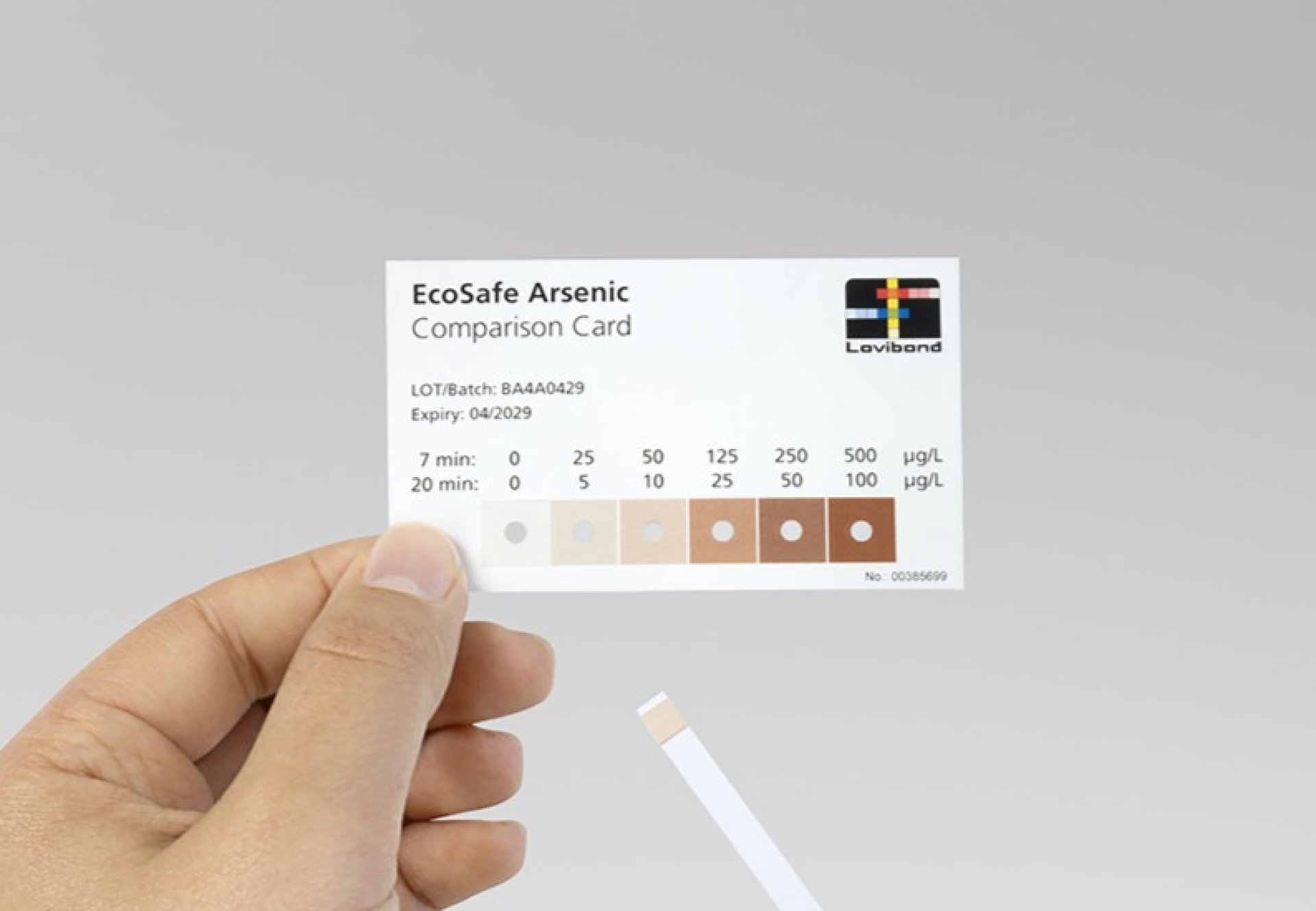
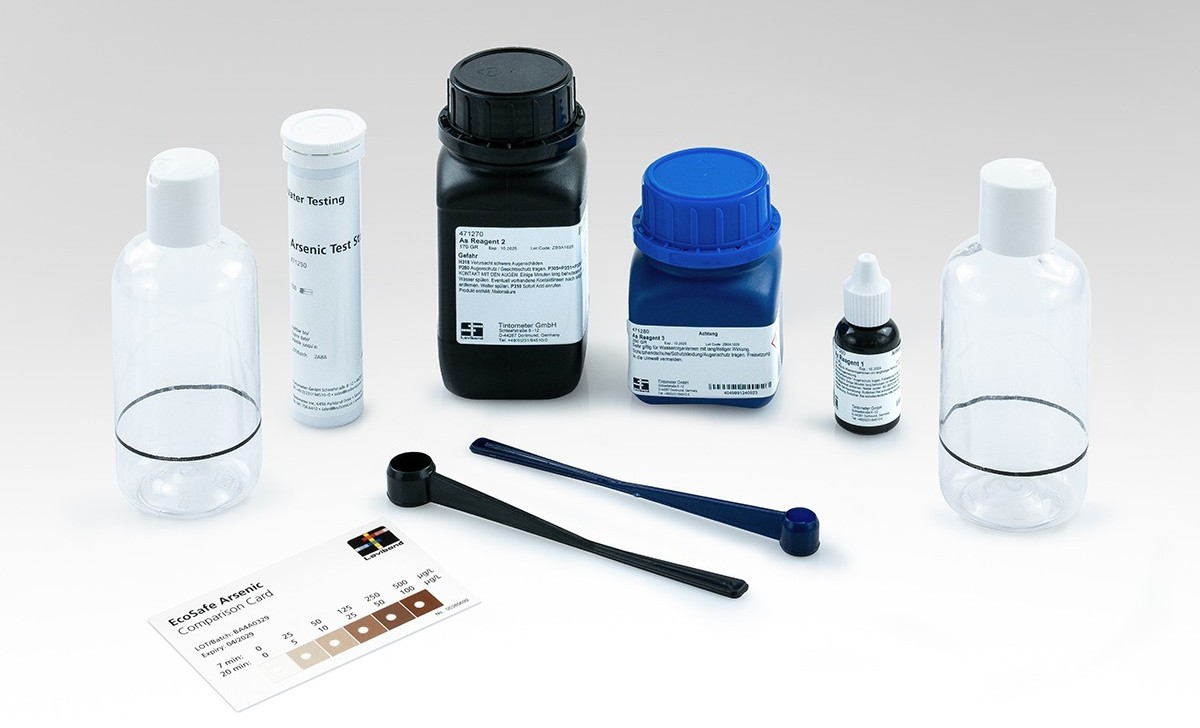
The Lovibond® EcoSafe Arsenic Test Kit is designed for on-site arsenic testing in water. According to Lovibond®, the kit uses a patented mercury-free indicator and is intended for straightforward field use. The product information lists a testing range of 2–500 µg/L and results in 7 or 20 minutes, depending on the arsenic concentration. Lovibond
Key features of EcoSafe Arsenic
- Mercury-free indicator
For arsenic testing in water, the test kit uses a mercury-free indicator, according to the manufacturer. This avoids introducing mercury as part of the test procedure and reflects a product design that considers the handling and disposal of test materials. Always follow the product instructions for use and disposal. - Results in 7 or 20 minutes
The stated test time depends on the arsenic concentration and the test procedure. This makes the kit an option for preliminary arsenic testing in water at the sampling location, where a quick screening result can support planning for the next step. - Designed for field use
Lovibond® describes a pictogram-style manual and colour-coded components to guide users through the procedure. The manufacturer states that prior laboratory experience is not required. For reliable arsenic testing in water, users should still follow the instructions carefully and use the kit only for its stated purpose. - Testing range stated by the manufacturer
Lovibond® lists a range of 2–500 µg/L for the product. Before starting arsenic testing in water, check the product documentation to confirm that the test range and procedure are suitable for the sample and monitoring objective.
Who may use a field kit for arsenic testing in water?
A field kit may be useful to organisations that conduct water surveys or screening, including:
- Environmental monitoring agencies
- Public-health teams and field officers
- Water-analysis laboratories
- NGOs and water-related projects
- Organisations conducting surveys of wells, rivers, or other water sources
For each application, teams should consider the sample type, the required measurement range, the monitoring objective, and whether laboratory confirmation is needed. These considerations help ensure arsenic testing in water supports the work appropriately rather than being used beyond the test’s intended role.
Frequently asked questions about arsenic testing in water
What is arsenic testing in water used for?
- It is used to assess arsenic in a water sample. A field kit can support preliminary screening, while laboratory analysis may be needed for confirmation or official decisions.
How long does the Lovibond® EcoSafe Arsenic test take?
- Lovibond® states that the test takes 7 or 20 minutes, depending on the arsenic concentration and the procedure.
Does EcoSafe Arsenic use mercury?
- Lovibond® describes EcoSafe Arsenic as using a patented mercury-free indicator. Follow the manufacturer’s instructions for handling and disposal.
Can a field test confirm that water is safe to drink?
A field test result alone should not be treated as certification that water is safe to drink. Arsenic testing in water should be conducted according to the product instructions, and results should be confirmed through appropriate laboratory analysis when required.
What is the stated test range?
Lovibond® lists a range of 2–500 µg/L for EcoSafe Arsenic. Check the latest product documentation for the applicable kit and test procedure.
Support water monitoring with Lovibond® EcoSafe Arsenic
Recent reports about the Sai River show why timely sampling and water-quality monitoring matter. Arsenic testing in water can help field teams screen samples and plan follow-up work, while laboratory confirmation remains important when results are used for official or health-related decisions.
The Lovibond® EcoSafe Arsenic Test Kit offers an option for on-site screening, with a mercury-free indicator, a stated test time of 7 or 20 minutes, and a product range of 2–500 µg/L. For product information and assistance selecting a suitable kit for your monitoring needs, contact Ilab Fluid Control Co., Ltd., distributor of Lovibond® products in Thailand.
Lovibond® – Precision in Water Testing
The news reports cited above describe findings reported in November 2026. Conditions and official guidance may change. Check updates from the relevant authorities before making decisions. Field screening results should be interpreted according to the test instructions and confirmed by an appropriate laboratory when required.